In the News
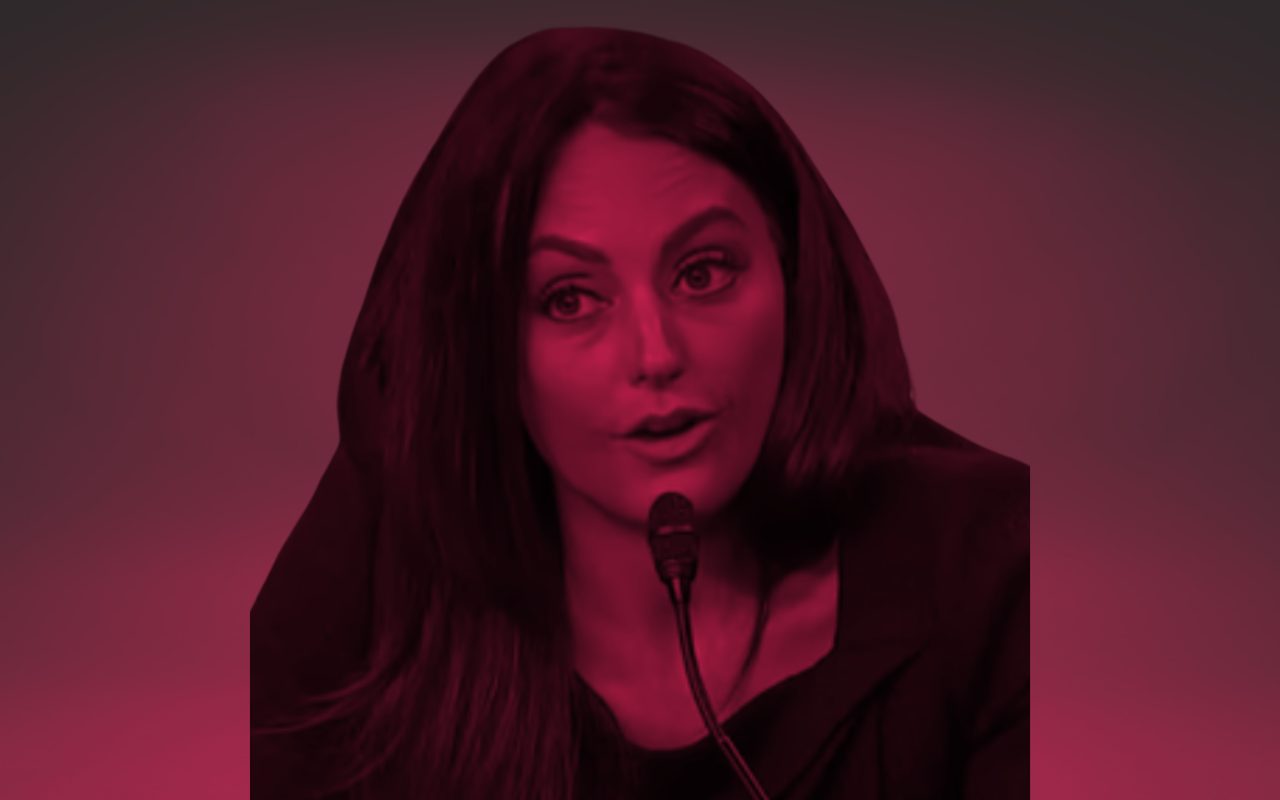
See All Judicial Nominees
Jennifer Mascott
Confirmed Trump 2.0
Confirmed to the Third Circuit Court of Appeals for Delaware
On July 16, 2025, President Trump nominated Jennifer Mascott to the Third Circuit Court of Appeals for Delaware. She was confirmed on October 9, 2025.
View/download the fact sheet here.
View/download our letter of opposition here.
View/download our report here.
Biography
Jennifer Mascott earned her J.D. from George Washington University School of Law (2006) and her B.S. in Mathematics and Gov’t & Politic from the University of Maryland at College Park, s (1997).
Legal Experience
Since March of this year, Mascott has worked as Senior Counsel to the President, White House Counsel’s Office. She is also currently an Associate Professor of Law & Founder, Separation of Powers Institute, Catholic Law (On Public Service Leave), works at Mascott Holdings, LLC (2023 – Present), is a trustee at Jeffery N. Mascott Irrevocable Trust (2023 – Present), and a managing trustee at Adfero (2025). Her other most recent experience was as a volunteer with the Trump Vance Transition 47 (Dec. 2024 – Jan. 2025) and a public member at the Administrative Conference of the U.S. (2018 – 2019 | 2021 – 2025). Her other work history, includes:
- Supreme Court Contributor, ’23-’24 term, NBC News (Sep. 2023 – Aug. 2024)
- Council Member, ABA Administrative Law Section (Sep. 2023 – Aug. 2024)
- George Mason University – Antonin Scalia Law School (Jan. 2021 – June 2024)
- Co-Executive Director, The Center for the Study of the Administrative State (May 2021 – June 2024)
- Assistant Professor of Law (Jan. 2021 – June 2024)
- U.S. Department of Justice
- Deputy Assistant Attorney General, Office of Legal Counsel (Nov. 2020 – Jan. 2021)
- Associate Deputy Attorney (May 2020 – Nov. 2020)
- Deputy Assistant Attorney General, Office of Legal Counsel (Apr. 2019 – May 2020)
- George Mason University – Antonin Scalia Law School
- Assistant Professor of Law (Aug. 2018 – Mar. 2019)
- Assistant Professor of Law & Faculty Director, Supreme Court and Administrative Law Clinics (Aug. 2017 – Aug. 2018)
- Of Counsel, Consovoy McCarthy PLLC (July 2017 – Mar. 2019)
- Olin/Searle Fellow in Law, Georgetown University Law Center (2015 – 2017)
- Adjunct Faculty, The Geroge Washington University of Law (2011 – 2017)
- Administrative Law (spring 2015; summer 2012; spring 2011)
- Advanced Field Placement Program (discussion group leader) (2012–13)
- Independent Legal Writing Advisor (fall 2012)
- Law Clerk, Justice Thomas, U.S. Supreme Court (2008 – 2009)
- Law Clerk, Judge Brett Kavanaugh, U.S. Court of Appeals for the D.C. Circuit (2006 – 2007)
- Summer Associate, Covington & Burling (2005)
- Research Assistant, George Washington University Law School (2004 – 2005)
- Judicial Intern, Chambers of Judge Richard Leon of the U.S. District Court for D.C. (2004)
- Press Secretary, Rep. Anne Northup (R-KY) (March 2002 – July 2003)
- Press Secretary, Rep. Eric Cantor (R-VA) (Jan. 2001 – 2002)
- Deputy Press Secretary/ Systems Technology Manager, U.S. Senate Republican Conference (1999 – 2001)
- Legislative Assistant/Staff Assistant, U.S. Congressman John Hostettler (1997 – 1999)
Key Facts and Context
- Membership in the Federalist Society.
- Testified in U.S. House Judiciary Subcommittee on the Administrative State, Regulatory Reform, and Antitrust (March 20, 2024)
- During this hearing, Mascott indicated her support for the overturning of the Chevron Doctrine. She specifically singled out the Consumer Financial Protection Bureau (CFPB), arguing that their “blanket authority to conduct hearings and adjudication proceedings” was far too expansive.
- She testified that the Dodd-Frank Act “explosively expanded agency power to bring enforcement actions” and that it was “unclear why that [was] necessary.”
- The Dodd-Frank Act was established in the wake of the 2008 financial crisis with the goal to increase regulation and oversight of financial institutions to protect consumers from abusive practices.
- During a Federalist Society Panel, Mascott spoke about Humphrey’s Executor, the Supreme Court precedent that limits the president’s power to remove officials from independent agencies. In the panel, she stated that “some of us . . . have reason to be concerned” about what Humphrey’s Executor symbolizes, claiming that one of those concerns is the restriction on the president to direct commissioners.
- Mascott has an expansive view of executive power, during a Senate Judiciary Committee Hearing on Trump v. U.S. (Sept. 24, 2024) she asserted that the decision was “essential [for] the president to be able to do his job.” And that it was important “Not to subject him to criminal prosecution for doing his job.”
- Drafted an article praising Justice Thomas’ legacy on the Supreme Court. In praising Thomas’ influence, she specifically spoke to his encouragement for “the court to stop discovering substantive rights in the due process clause.”
- Further, she pointed to his eagerness to grant review on cases related to the Second Amendment. And that in Second Amendment cases it is important for the court to consider “the proper scope,” because the right to bear arms is “often undervalued by the judiciary.”
- Drafted an article related to the Dobbs decision the week of oral arguments, stating that “The most constitutionally correct outcome in Dobbs would be for the Court to conclude that the Fourteenth Amendment Due Process Clause—a guarantee of process protections—contains no substantive right.”
- Drafted an article after the Dobbs decision, overturning the right to abortion titled, The Supreme Court Reclaims Its Legitimacy.
- In the article, Mascott wrote: “On Friday a five-justice majority definitively overruled Roe v. Wade (1973) and Planned Parenthood v. Casey (1992), affirming states’ authority to regulate abortion. In so doing, the court reclaimed its legitimate constitutional role and signaled a willingness to re-examine precedents that strayed across the line between law and policy or misconstrued important constitutional provisions.”
- Drafted an article after the Court’s decision in West Virginia v. EPA, discussing agency actions she thinks are too powerful, pointing to the Centers for Disease Control and Preventions authority to declare a national moratorium on evictions during the COVID-19 Pandemic and the Occupational Safety and Health Administration’s attempt to ensure individuals were vaccinated or tested in private workplaces.
Related News
Press Release
New Report Shows Disturbing Trends in Trump’s Reshaping of the Judiciary
Op-ed