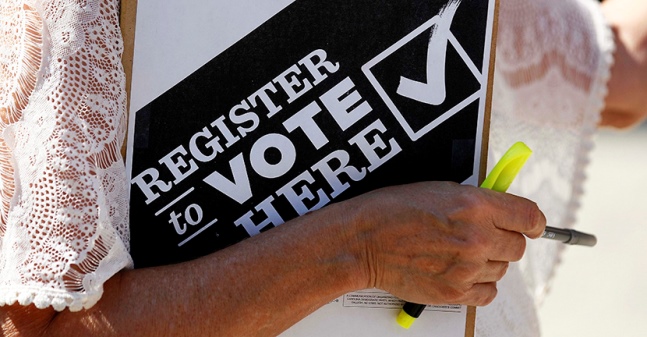
National Voter Registration Day (September 16) represents more than just a single day of civic engagement—it embodies our collective commitment to ensuring every eligible American can participate in our democracy. For public charities, conducting nonpartisan voter registration drives isn’t just legally permissible; it’s a powerful way to fulfill your charitable mission of serving the public good.
As we face mounting challenges to voting rights, the work of registering voters becomes something approaching an act of democratic resistance. By ensuring our activities remain strictly nonpartisan and fully compliant with applicable laws, we can help protect and expand access to this fundamental right while keeping our tax-exempt status intact.
The Legal Foundation: 501(c)(3)s and Voter Registration
At first blush, you might think that anything touching elections would be off-limits for 501(c)(3)s given the federal tax law’s strict prohibition on partisan political activity. And while 501(c)(3) private foundations have some hoops to jump through if they want to fund nonpartisan voter registration efforts, federal tax law broadly permits 501(c)(3) public charities to conduct voter registration activities so long as they do not show support or opposition to candidates or parties. The IRS has consistently held that nonpartisan voter registration drives are considered charitable activities that further democratic participation.
The key requirement is that all 501(c)(3) voter registration activities must be conducted on a strictly nonpartisan basis. This means:
- Registration drives must be open to all eligible voters regardless of their political views.
- Materials and messaging cannot favor any particular candidate or political party.
- Voter registration activities should avoid mentioning issues, particularly by taking stances on politically divisive topics, in a way that suggests support or opposition for parties or candidates.
- Staff and volunteers cannot express preferences for specific candidates or parties during registration activities.
- The organization cannot target registration efforts based on voters’ likely political preferences, but it may target based on the organization’s service area or the communities it regularly works with.
These activities fall squarely within the charitable purposes outlined in IRC Section 501(c)(3), as they promote civic engagement and democratic participation without advancing any private political interests. Think of it as the nonprofit equivalent of good government—helping people participate in democracy without trying to convince them who they should vote for.
State Law Considerations: The Variety Pack with Over 50 Flavors
While federal tax law provides the overarching framework, 501(c)(3) organizations must also navigate what can only be described as a bewildering patchwork of varying state laws governing voter registration activities. These requirements differ dramatically across jurisdictions and can include:
Registration and Training Mandates: Some states require organizations conducting voter registration drives to register with state election officials and complete training programs. Tennessee enacted particularly restrictive requirements that subject organizations to fines of up to $10,000 per county for submitting more than 500 “deficient” forms, plus potential criminal penalties of up to a year in prison for certain violations creating a significant chilling effect on voter registration activities in communities that need them most. The Volunteer State isn’t alone in setting up regulatory hurdles for charities conducting voter registration drives, so make sure you know your state’s rules.
Submission Deadlines and Procedures: States like Texas require voter registration applications to be submitted within specific timeframes, while others maintain more flexible submission requirements. Organizations must stay on top of these deadlines to ensure registrations are actually processed in time for upcoming elections, because what good is a registration drive if the forms never make it to the election office? And maybe more importantly, there may be substantial legal exposure if you miss deadlines.
Recordkeeping and Reporting Requirements: Some states, including Missouri, have attempted to impose criminal penalties for voter registration activities that don’t comply with complex record-keeping requirements, though courts have struck down some of these restrictions as unconstitutional. It’s worth noting that some of these requirements seem designed more to discourage registration efforts than to ensure compliance.
Identification and Documentation: States maintain wildly different requirements for voter identification during registration and voting, with some requiring photo ID, others accepting non-photo identification, and still others requiring no ID at the polls.
Before launching any voter registration initiative, organizations should thoroughly research their state’s specific requirements and consult with legal counsel familiar with election law in their jurisdiction. This isn’t the time to wing it.
Current Threats to Voting Rights in 2025
The landscape for voter registration has become increasingly treacherous. Since the Supreme Court’s 2013 decision in Shelby County v. Holder gutted key provisions of the Voting Rights Act, states have enacted nearly 100 restrictive voting laws, with many specifically targeting voter registration activities.
Several deeply concerning trends have emerged:
- Criminalization of Voter Registration: Conservative policy proposals like Project 2025 seek to prosecute election officials and voter registration organizations under federal conspiracy laws originally designed to protect civil rights—a breathtaking inversion of the laws’ original purpose. Organizations in states like Texas now face felony charges for the apparently radical act of proactively distributing mail-in ballot applications to eligible voters.
- Restrictive Documentation Requirements: Proposed federal legislation like the SAVE Act would require all voters to produce documents like passports or birth certificates each time they register, potentially blocking millions of eligible Americans from participating in democracy. While producing documents like these isn’t a hassle for everyone, it’s sometimes difficult or impossible for others and apparently conservative interests think voting needs to be as complicated as that worst DMV story you still tell your friends about.
- Voter Roll Purges: New policies aim to give federal authorities access to state voter rolls for aggressive purging operations—a voter suppression tactic that sounds more administrative than it actually is because the breadth and targets of the purges can benefit some political interests over others.
- Targeting Communities of Color: Many of these restrictive measures disproportionately impact Black voters and other communities of color, with one in twenty-two Black adults of voting age currently disenfranchised due to felony convictions. This isn’t accidental.
The Critical Role of Voting Rights Organizations
In this challenging environment, the work of 501(c)(3) organizations is vital. More than one in four eligible Americans isn’t registered to vote—creating an enormous opportunity for nonpartisan civic engagement organizations to expand democratic participation, assuming they can navigate the increasingly complex legal landscape.
Effective voter registration efforts should:
- Focus on underserved communities that face the greatest barriers to registration.
- Provide multilingual assistance where needed to serve diverse populations.
- Coordinate with local election officials to ensure compliance with all applicable laws.
- Maintain detailed records documenting the nonpartisan nature of all activities.
- Train staff and volunteers thoroughly on legal requirements and prohibited partisan activities.
Best Practices for Legal Compliance
To protect both your organization and the communities you serve, consider these essential steps:
- Develop written policies clearly outlining your organization’s commitment to nonpartisan voter registration.
- Train all staff and volunteers on federal tax law requirements and state election laws—and make sure they understand why these rules matter.
- Document your activities meticulously to demonstrate compliance with legal requirements.
- Refer to Bolder Advocacy resources, including our sample election season policy, before launching new voter registration initiatives (and consult with legal counsel too).
- Stay informed about changing state and federal laws affecting voter registration—because the rules keep changing.
What Does This Mean?
As we approach National Voter Registration Day on September 16th, nonprofit organizations across the country are gearing up for one of democracy’s most fundamental activities, helping eligible Americans register to vote. In an era where voting rights face unprecedented threats from restrictive legislation and aggressive enforcement proposals, the work of 501(c)(3) public charities in facilitating voter registration has never been more critical or, in some states, legally complex.
The stakes couldn’t be higher. As we prepare to honor the 60th anniversary of the Voting Rights Act in 2025, voting discrimination remains a persistent and evolving threat. But through careful, legally compliant voter registration efforts, 501(c)(3) organizations can help ensure that democracy remains accessible to all eligible Americans—not just those who can (or have the time to) navigate an increasingly complex maze of requirements.