How the Supreme Court is Wielding the Unchecked Power It Gave Itself
Issues
Environment, Executive Power & Civil Liberties, Reproductive Rights
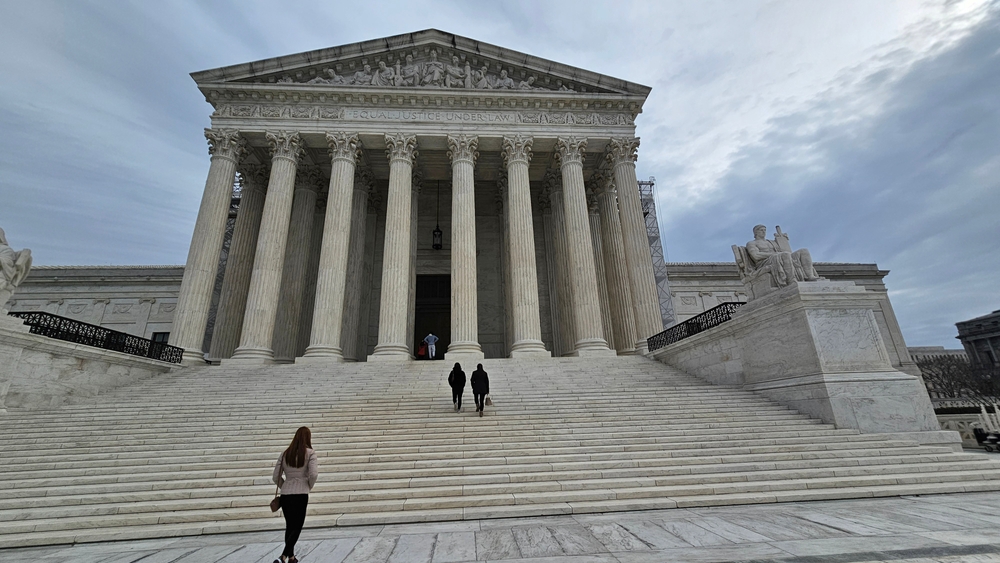
Last year in Loper Bright Enterprises v. Raimondo, the Supreme Court’s conservative majority overturned four decades of precedent, casting aside the principle of Chevron deference. For years, the Court had acknowledged a simple truth: Administrative agencies possess the specialized expertise that courts lack, making them better equipped to interpret ambiguous statutes. But Loper Bright changed all that. The Court ruled that judges — regardless of their knowledge of science, economics, medicine, or engineering — could substitute their own judgment for that of expert agencies.
The result? A weakened administrative state and a judiciary newly empowered to inject political ideology into regulatory decisions. And this term, the justices wasted no time doing just that.
The First Term Post-Loper Bright
The Court’s first term post-Loper Bright was marked by partisanship thinly veiled as legal reasoning.
In Medina v. Planned Parenthood, the Court ruled that because the Medicaid Act lacks explicit language granting patients the power to enforce the “free choice of provider” provision, no such right exists. That provision allows Medicaid recipients to seek care from any qualified provider.
Beneath the legalese lies the true target of the Court’s conservative majority: access to reproductive health care. The fallout of this decision is likely to have catastrophic effects on women’s health and access to care across the country as Republican states further block Medicaid funding for Planned Parenthood and other providers that happen to also provide abortion care. Even though doing so violates the plain language of the statute, the Supreme Court has now made it impossible for anyone to sue for the harm. Planned Parenthood is often the only provider of care to many of the country’s most vulnerable patients and without Medicaid funds will likely be forced to close some of their clinics that are the only providers of vital preventative care — all because the Supreme Court’s disingenuous interpretation of a single clause “omitted” from a statute.
In another case this term, Seven County Infrastructure Coalition v. Eagle County, the Court considered whether the federal government properly complied with federal environmental law when it issued an environmental impact statement (EIS) for an 88-mile railway in Utah’s Uinta Basin. The key ambiguity: Should the EIS consider indirect environmental impacts, like increased fossil fuel extraction, or only the direct effects of construction?
The Court ruled that agencies need only assess direct impacts if they determine that indirect effects are speculative. The conservative justices grounded their opinion in principles that could severely limit environmental protections. This wasn’t just a procedural decision; it was deeply ideological. By narrowing the scope of environmental review, the Court made it easier to fast-track industrial projects in ecologically sensitive areas. In this case alone, the landscape and environmental health of the Uinta Basin could change forever with fossil fuel extraction in the region made easier and more profitable than ever before.
In Bouarfa v. Mayorkas , the Court ruled that the secretary of Homeland Security had broad discretion to revoke a previously issued visa for “good cause” and that those decisions are not reviewable by the federal courts. Congress provided no threshold requirement for the secretary to meet in order to exercise his discretion in revoking the visa; therefore, the court had no grounds to determine what was considered proper or improper.
Another seemingly procedural decision, this case has serious real-world consequences. The secretary can now withdraw a visa at any time, creating a perilous climate of uncertainty for visa-holders, furthering conservative tactics to foment fear in migrant communities and weaponizing the Department of Homeland Security for the Trump administration’s agenda of tightening immigration controls and enhancing executive powers. For Mr. Bouarfa, it means he will likely be separated from his wife and three young children for years as the agency reconsiders his visa, missing some of the most formative years of their lives.
The throughline in these cases is that the federal courts — ultimately, the Supreme Court — now have the power to second-guess agency decisions when they choose and to designate winners and losers according to their policy preferences. In granting themselves this power, they have undermined their own authority by painting their decisions with a partisan brush.
Next Term’s Targets
While the Court is still deciding which cases it will take up next term, they are considering more attacks on the administrative state.
In Urias-Orellana v. Bondi, the Court could raise the bar as to how much deference courts of appeals should give to a determination by the Board of Immigration Appeals on whether an asylum seeker has been persecuted in their home country. A ruling that raises the bar could mean that individuals with credible fears for their safety may be denied refuge simply because they cannot meet a higher procedural threshold.
In Department of Education v. Career Colleges and Schools of Texas, the Court may strike down a Biden-era rule designed to provide student debt relief to borrowers who were misled or defrauded by their institutions. The rule broadened the scope of actionable misconduct and enabled group claims, making it easier for students — especially from marginalized communities — to access relief. A ruling against the regulation would continue the Court’s pattern of restricting debt forgiveness, reinforcing economic hardship for graduates already burdened by predatory lending and educational malpractice that the Department of Education is meant to relieve.
Unlikely Offroads
While the Court’s current trajectory is deeply troubling, Congress still has tools — albeit underused ones — to reassert its authority and reclaim the administrative state.
- Legislative Overrides: Congress can enact new laws to restore rights the Court has stripped away. For example, after the Supreme Court invalidated the Religious Freedom Restoration Act in City of Boerne v. Flores, Congress responded just three years later with the Religious Land Use and Institutionalized Persons Act (RLUIPA), a law carefully designed to withstand judicial scrutiny that is still in force today. Congress could do something similar in these and other cases.
- Jurisdiction Stripping: Congress has the constitutional power to limit the jurisdiction of the Supreme Court over cases not arising under its Article III authority. While politically controversial, this measure could prevent the Court from reviewing certain administrative or statutory challenges.
- Statutory Clarity: Legislators can draft precise, unambiguous laws that minimize the opportunities for judicial reinterpretation or misinterpretation. This may require abandoning sprawling omnibus bills in favor of carefully crafted statutes with clearly defined terms. Congress can also amend previously vague laws the Court has already reinterpreted.
Loper Bright marked a pivotal shift in the balance of power between the judiciary and the administrative state. As Justice Kagan said in her dissent, “it [gave] courts the power to make all manner of policy calls, including about how to weigh competing goods and values.” The Court’s new approach invites judges to substitute ideological judgment for agency expertise, undermining decades of settled law and threatening vital protections in economic justice, health care, civil rights, immigration, the environment, and more. Unless Congress reasserts its role, the coming terms may only deepen the erosion of regulatory governance — and with it, public trust in the rule of law.
Mia Simon is a Summer Associate with Alliance for Justice.