Supreme Court Prepares to Dismantle Independent Agencies in Favor of Partisan Chaos
Issues
As the Supreme Court convenes this term, it prepares to confront a constitutional question that strikes at the core of American governance: Should independent agencies exist to serve the public good or bend to the political will of the president? The Court’s answer could dismantle the modern civil service and paralyze the basic functions that keep government working.
To grasp the stakes, we must distinguish between executive departments and independent agencies. Executive departments — such as Justice, Defense, or State — are led by cabinet officials who serve “at the pleasure of the president.” Their job is to advance the president’s agenda, and because they can be removed at will, they are inevitably driven by politics.
Independent agencies are different. Created by Congress, they are structured to withstand political pressure. Commissioners serve staggered terms that extend beyond a single administration, presidents cannot remove them without cause, and many must include members of both political parties. Congress designed them this way for a reason. These agencies wield regulatory authority that demands expertise, institutional memory, and a long-term view of the public interest.
It’s what allows the National Labor Relations Board (NLRB) to defend workers against powerful corporations tied to a president’s allies. It keeps the Federal Communications Commission (FCC) from becoming a weapon to silence media outlets that report unflattering truths or make jokes the president and his allies don’t find funny. It ensures the Securities and Exchange Commission (SEC) can investigate fraud and insider trading, even when the culprits might be some of the president’s biggest donors.
If this independence is removed, a president could — on day one — fire independent commissioners and replace them with loyalists who serve politics, not the public. The consequences would ripple into everyday life, determining whether the products we buy are safe, whether airline disasters are investigated or buried, whether the press can report freely, whether Wall Street is held accountable or left to run wild, and more. In that world, our interests are stacked against corporate self-interest and the cozy favors traded with executive officials. It’s not a fair fight, and the outcome is inevitable: The public loses, every time.
Make no mistake: Trump is not the first president to try to tear down the guardrails Congress built around independent agencies. Nearly a century ago, President Franklin Roosevelt attempted the same thing, firing a commissioner of the Federal Trade Commission (FTC) because he wanted loyalists who would carry out his agenda. The Supreme Court unanimously rejected this attempt.
In Humphrey’s Executor v. United States (1935), the justices drew a bright line: Presidents can dismiss cabinet officials in executive departments at will, but the FTC — and agencies like it — must stay independent and insulated from political pressures and manipulation.
These quasi-legislative and quasi-judicial functions demand expertise and continuity, not subservience to the politics of the moment. Their members, the Court recognized, are meant to act as independent experts “free from political domination or control.” Independence, the Court said, is essential.
Despite the constitutional precedent set in Humphrey’s Executor, Trump has repeatedly tried to remove commissioners of independent agencies without cause. He has done so for political and policy reasons — the very types of interference that Congress and the Court’s prior precedent were meant to prevent. But times have changed, and this Court’s current conservative majority has appeared willing and eager to overturn this precedent by way of its rulings this summer on its emergency “shadow” docket. This docket, dedicated to ensuring disputes that need to be resolved with urgency because of the “irreparable harm” that might be caused to one of the parties is rarely used to change existing law or overturn precedent. But this summer, the Court, in sidestepping its own precedent has — in almost every instance — allowed Trump to move forward with these unprecedented firings.
In Trump v. Wilcox, the Court lifted an order blocking Trump from removing Gwynne Wilcox of the National Labor Relations Board and Cathy Harris of the Merit Systems Protection Board. Empowered by that ruling, Trump accelerated firings across agencies, and the Court — treating its emergency “shadow” docket orders as precedential — continued to sign off.
In Trump v. Boyle, the Court extended the Wilcox reasoning to the Consumer Product Safety Commission, another multimember body, again allowing Trump to remove a commissioner without cause. Soon after, in Trump v. Slaughter the Court approved Trump’s removal of FTC Commissioner Rebecca Slaughter in addition to granting certiorari before any lower court rulings on the merits. The Court issued all of these decisions on the emergency docket with little to no reasoning.
By repeatedly treating Wilcox as binding, the conservative majority adopted a sweeping view that the president can control any agency that carries out the work of the government. Without explaining themselves, they’ve essentially rejected the existence of independent agencies and invited partisan control of every one of them.
This is a sharp break from precedent. Humphrey’s Executor — which established protections for multimember commissions like the FTC — has not been overturned. Even in Seila Law v. CFPB (2020) and Collins v. Yellen (2021), the Court confined presidential removal to single-director agencies while leaving multimember commissions intact. However narrow, that line preserved the core of Humphrey’s Executor.
The liberal justices have dissented in each of these emergency rulings, warning that the majority is using the emergency docket to “overrule . . . existing law.” As Justice Kagan wrote, “The President has no legal right to relief” in these disputes. In her dissent, she accused the majority of allowing the president to “overrule Humphrey’s Executor by fiat.”
Kagan exposed what the majority sought to obscure: that their reasoning inflated the interests of “the Government” when in reality it was the executive alone. Congress, too, is part of the government, and Congress has an equally strong claim in “preserving the legislation it has enacted to limit removals.” The lower courts had recognized this, ruling for reinstatement of the federal officers, yet the majority brushed past it.
Kagan’s dissents have been blistering across the docket. In Boyle, she condemned the majority for using the emergency docket to “destroy the independence of an independent agency, as established by Congress.” In her words, the Court has enabled “an unprecedented increase of executive power at the expense of legislative authority.”
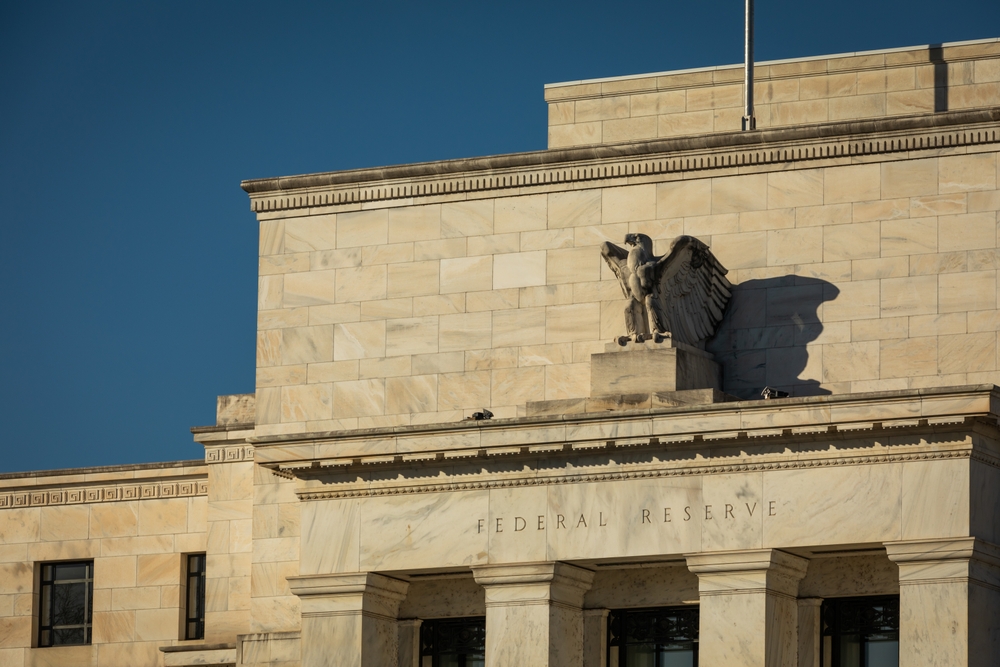
Because “the Federal Reserve’s independence rests on the same constitutional and analytic foundations as that of the NLRB, MSPB, FTC, FCC, and so on — which is to say it rests largely on Humphrey’s,” these rulings signal potential threats to the Fed’s independence. Yet in Wilcox, the conservative majority abruptly declared their order had “no bearing” on the Federal Reserve, inventing a carve-out by labeling it “uniquely structured” with a “distinct historical tradition.” As Justice Kagan observed in dissent, by creating this “bespoke Federal Reserve exception,” the Court is not upholding precedent; it is manipulating doctrine to reassure markets while delivering broad victories for the president.
Despite the Court’s sudden carve-out for the Federal Reserve, Trump and his allies still moved to oust Federal Reserve Board Governor Lisa Cook based on a flimsy allegation. It was the first time in American history that a president attempted to remove a sitting Fed governor, an unprecedented and dangerous act against a central bank deliberately designed to be shielded from politics — its independence serving as a cornerstone of global financial stability. The Court’s emergency order, issued without reasoning or dissent, kept Cook in her post for now and set the case for argument early next year.
This Supreme Court term, the justices will hear Trump v. Slaughter — the vehicle for reconsidering Humphrey’s Executor — and Trump v. Cook, which raises similar questions about the Federal Reserve Board of Governors. If the Court’s emergency orders are any indication, Humphrey’s Executor is on borrowed time, and if overturned, the consequences will not be confined to Washington.
Imagine a Consumer Product Safety Commission stripped of independence and pressured by corporate CEOs to bury evidence of dangerous defects in everyday products putting families at risk. The FTC could be prevented from investigating anticompetitive practices and price gouging. The National Transportation Safety Board could be blocked from thoroughly investigating corporate negligence after crashes on highways, railroads, or even in the skies, leaving preventable tragedies unexamined and unaddressed.
If Humphrey’s Executor falls, the civil service will no longer be a stabilizing backbone of expertise and fairness. Agencies will be stripped and reshaped on a political whim, staffed not with career professionals but with loyalists. Expertise and institutional memory will be replaced with loyalty, and facts will be judged by political allegiance rather than evidence. What remains would not be a government of laws but a government of one — volatile, partisan, and unmoored from fact, leaving the public unprotected. America’s future will no longer rest on the steady hand of institutions but on the shifting winds of personality and power.
Jamaal Lockings is a Dorot Fellow at Alliance for Justice.